Evidence Synthesis & Living Knowledge Base
From fragmented evidence to continuously updated, decision-ready intelligence to support clinical development
NouStarX transforms disconnected evidence into a continuously updated, AI-curated Living Knowledge Base. By integrating published literature, clinical trials, real-world evidence, and internal insights, we convert evidence into structured, version-controlled evidence objects, such as endpoints, outcomes, populations, comparators, and safety signals, that can be queried, recombined, and reused across clinical development, medical affairs, and market access workflows.
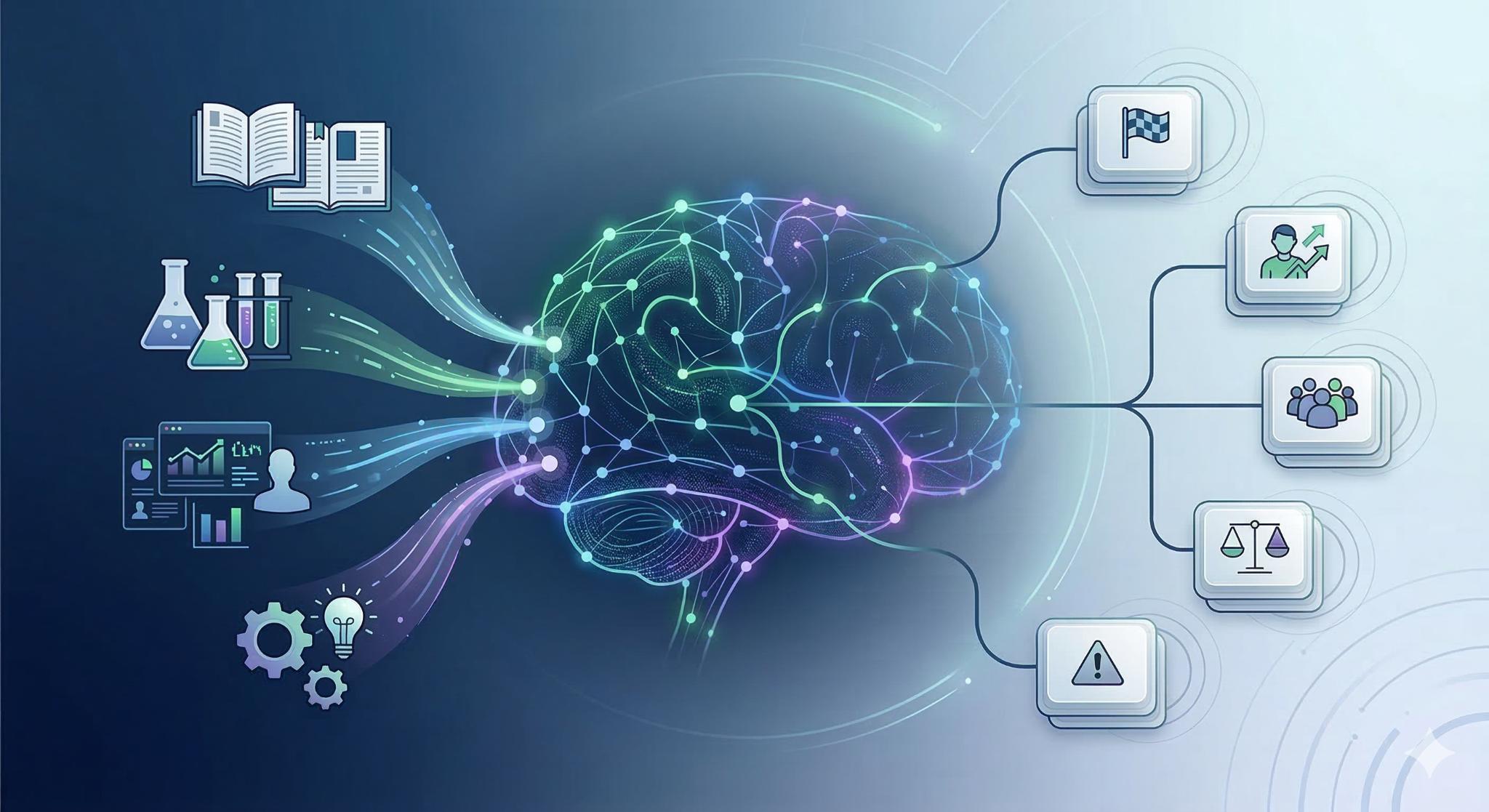
Key Capabilities
Automated Literature Reviews
Automated systematic and targeted literature reviews (PRISMA-aligned)
Structured Data Extraction
Structured extraction of endpoints, outcomes, comparators, and safety signals
Living Evidence Maps
Living evidence maps by indication, mechanism of action, or asset
Cross-Functional Intelligence
Reusable evidence components across clinical development, regulatory, medical affairs and HEOR teams
Literature Evidence Layer
Turn published research into structured, reusable intelligence
AI & use cases
What the AI Does
- Automates Systematic Literature Review (SLR)/Targeted Literature Review (TLR) workflows with transparent inclusion/exclusion logic
- Extracts structured elements:
- Endpoints (such as OS, PFS, QoL, biomarkers, etc.)
- Effect sizes & safety outcomes
- Study populations, comparators, lines of therapy
- Grades and tags evidence by study design and risk of bias
Use Cases
- Clinical Development: De-risk protocol design by grounding endpoints and eligibility in historical precedent.
- Biostatistics: Power your trials with precision through quantitative benchmarking and rigorous simulation.
- Medical Affairs: Translate complex trial data into strategic evidence roadmaps for expert engagement.
- HEOR/Market Access: Secure market access by building predictive models that prove long-term value to payers.
- Portfolio Strategy: Compare evidence strength across assets or MOAs
Clinical Trial Evidence Layer
Learn from precedent to design better trials
AI & use cases
What the AI Does
- Parses trial records and protocols to extract:
- Inclusion/exclusion criteria
- Endpoints & assessment schedules
- Enrollment assumptions & timelines
- Links trials to downstream publications and outcomes
- Builds trial precedent maps by indication, phase, and design
Use Cases
- Clinical Development: Benchmark protocols vs. historical designs
- Clinical Operations: Anticipate enrollment risk
- Regulatory Affairs: Justify endpoint and comparator selection
- Early Development: Identify white space or over-crowded designs
LIVING
KNOWLEDGE
BASE
Real-World Evidence (RWE) Layer
Ground development decisions in real-world patient experience
AI & use cases
What the AI Does
- Harmonizes heterogeneous RWE into comparable evidence objects
- Extracts:
- Treatment patterns & lines of therapy
- Real-world outcomes & safety signals
- Patient journeys & attrition points
- Links RWE insights to trial eligibility and endpoint strategy
Use Cases
- HEOR/RWE: Quantify unmet need and disease burden
- Clinical Development: Improve generalizability of trial criteria
- Medical Affairs: Support real-world effectiveness narratives
- Market Access: Strengthen HTA submissions with complementary RWE
Internal Insights
Preserve institutional memory and accelerate decision-making
AI & use cases
What the AI Does
- Securely indexes and summarizes internal knowledge
- Links internal insights to external evidence
- Enables semantic search across historical learnings
- Flags gaps and inconsistencies between internal and external data
Use Cases
- Regulatory Affairs: Reuse prior rationales and responses efficiently
- Medical Affairs: Align field insights with published evidence
- Portfolio Teams: Avoid repeating past mistakes
- Leadership: Enable faster, evidence-backed strategic decisions
How the Layers Work Together
Example: Phase II Trial Planning
Outcome: A more defensible, feasible, and submission-ready trial design—powered by continuously updated, cross-validated evidence.